Wednesday, March 5, 2014

Are university degrees an expensive mistake?

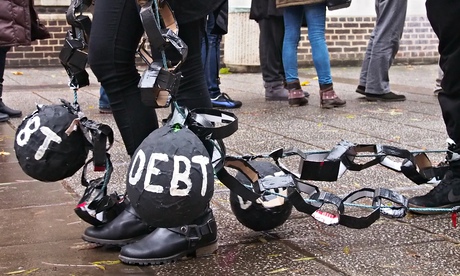
Students at Soas protest at government plans to sell off loan debts to private companies. Photograph: Pete Riches/Demotix/Corbis
It's no surprise a growing number of parents are worried their kids' degrees were an expensive mistake. Once upon a time students could rely on their degree to give them a leg-up to a decent career. But times have changed. Now young people are spat out into a thick sludge of economic misfortunes, and they face a jobs market in which their impressive CVs might not even get them a shop job.

Our higher education system is a mess, and its high time the value for money of degrees was brought into the spotlight for inspection. Poor value degrees pose a real threat to young people's future financial security. It's an uncomfortable message that careers services need to start spreading – because although politicians would rather brush it off, this generation simply can't afford to let it slide.

One of the difficulties with this conversation is identifying who is and who isn't getting good value from their degrees. I graduated from UCL in 2010 and would now consider my degree to have been decent value for money. The teaching was good and although my course (geography) isn't relevant to my career, I don't think I'd have become a financial journalist without it. However three years into work, I still have more than £20,000 of my student loan outstanding, even though I repay around £150 every month. This isn't unusual for a graduate my age with a decent job and a full loan to pay off.

Among others with similar prospects from my year group, the consensus is clear. We don't regret our degrees for a second, but the impact of our student loan on our ability to save is considerable. The repayments are hugely noticeable even though they barely scrape the froth off what we owe.

If I keep paying £150 a month, in 10 years I'll have paid off £18,000 of my loan. But if I could invest that money in the stock market instead, managing to make an average 5% annual return, in a decade I'd have saved £23,000 – probably enough for the deposit on a flat. I can (just about) accept this drain on my finances. But if I hadn't been so lucky with my career, the debt would be much harder to stomach. If I'd tried to get a graduate job, failed, and settled for a non-graduate career in which I earned more than £15,000 (my student loan repayment threshold), I struggle to see how my degree would have been anything but damaging to my personal finances. A disturbing number of debt-ridden graduates are facing this reality. Swamped by intense competition for jobs, nearly half (47%) are failing to get hired in "graduate" roles, even five years after leaving university.

Millions of people make better-than-average livings without going to university. Only 14% of British workers currently earn more than £40k a year, but 48% of these don't have a degree, according to numbers crunched for the Guardian by the IFS. However, because more people are going to university, competition is intensifying and some jobs that were once open to anyone now require degrees. Several years down the line, the labour market is likely to be full of student loan-ridden graduates.

The new post-2012 loans are particularly punishing for people on medium salaries. Graduates repay 9% of all earnings above £21,000 for 30 years (or until they've paid it off).This means modest earners get off relatively lightly, but over the course of their career, someone starting on a typical graduate wage of £25,000 and with a typical debt of £45,000, is likely to pay it back in full.

In this case repayments would start at £360 a year, which, if paid instead into a company pension could grow to around £100,000 in value over 30 years, according to Hargreaves Lansdown calculations, which assume a 5% growth rate.

Now consider that the UK is on track for a pensions crisis because people aren't saving enough for retirement. A £100,000 pension pot is more than three times as big as the nest-egg the average British worker is squirrelling away. It could mean the difference between total dependence on the state pension and being comfortably off in old age.

Far from a friendly, fluffy "graduate tax" as the government likes to portray student loans, loans taken out from 2012 produce debts with sharp teeth and real potential to chew up people's ability to save. And most graduates will leave vast (and growing) chunks of debt unpaid, leaving a potentially devastating burden for future taxpayers.

Politicians would rather stick their fingers in their ears and whistle than admit that too many people are paying too much to go to university. For them, herding youngsters into useless degree courses as a quick-fix for the youth unemployment rate makes sense – especially when each student it finances results in a £94,000 profit for the Treasury.

The cost of university has already hurt my generation's finances, but it doesn't have to continue to. Courses should either cultivate superior academic rigour or teach people industry or trade skills they can take with them into the workplace. A closer inspection of the courses that do neither of these things, and an attempt to improve them, could be a good first step towards making sure people's money isn't being wasted.

the guaridan

Help! I'm being stalked by an online supermarket that wants a 'relationship

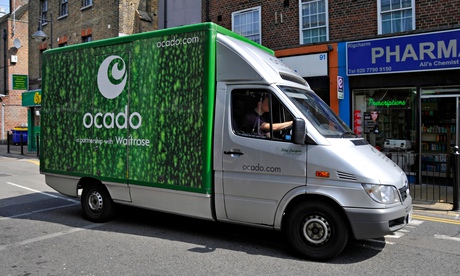
Ocado says: 'It's time to celebrate!' Er, no it isn't … Photograph: Alamy


Call me cold, but lots of people seem to be having relationships with me that I don't feel I am having with them. Cold might not be the right word. But definitely uptight with a fear of intimacy. Yeah, read that – and would have got the T-shirt, but didn't want to go that far. And it's getting worse, for I am increasingly at sea in a world of rampant overfamiliarity.

Only yesterday, some kind of leaflet popped through the door promising to turn me on. From an energy company? Yuck! This was as good as the glossy Valentine's card from a lettings agency that just couldn't wait to get its hands on my property … oooer missus.

Even well-established companies have taken to addressing me as though we were in a serious relationship in which have I been neglectful. Ocado (yes, I get stuff from them delivered to my Islington-upon-Hampstead castle) sends me creepy emails about our "anniversary". "Hasn't time flown? It's time to celebrate." Jeez, I had forgotten the incredible day when I discovered a supermarket delivered. Next time I see the van, I guess I should just propose to it.

The thing is, I haven't paid this anniversary much attention as I am tied up with giving constant feedback to my mobile phone company. Every time I query a bill, I get 27 texts asking me to rate the performance of the person I spoke to. Trouble is, I am still in the middle of rating the venue and bar facilities of a fringe theatre I went to at the weekend.

This constant loop of marketing, consumption and feedback means I rarely have time to talk to my children or anyone else in my stupid offline life. It's pretty exhausting telling everyone exactly how their service can be improved. You can't just say you didn't like an ad on Facebook, you have to explain why. Which reminds me: I must tell TripAdvisor that the hotel in Paris didn't have very good body lotion.

This creeping interactive culture exists partly because of less face-to-face communication. But it is taking the form of intrusive and fake missives that appear to assume we are in a state of quasi-sexual excitement over that most mundane transaction, paying a gas bill.

In publications such as Forbes you can see all sorts of crappy business waffle about "intimate marketing". The key relationship is between customers and brands, and those emotional fires have to keep being stoked. Yikes! Clearly, I have a problem with commitment and sometimes just want to buy something and move on … This, apparently, is shallow and short-lived – exactly what I seek, but then I am a bad person with a transaction mindset when I, and whoever I am buying from, should be thinking about long-term goals.

Such relationships are acted out when you are chatting to someone on the phone who is involving you in a new contract, finding you a special deal, bonding. Building rapport is part of their script. It's not their fault: this is how business is done.

Essentially, this is the globalisation of etiquette premised on the American model. When I waitressed in the US, I soon had to learn that it was about more than getting the food to the table but also providing a one-woman show. In my case, a show that did not resemble being a decent waitress in any way. Americans expect a certain level of service and do not find friendliness suspect.

What we appear to have imported is overfamiliarity without good service: thus, we have to wait in all day to get a boiler repaired while at the same time being bombarded with these strangely personal love notes. My internet provider is emailing me daily about date night at the movies and telling me to get the popcorn in? Obviously I am going to chuck them soon, as another broadband company is promising so much more.

Does any of this stuff work? I only know one person for whom it does and she is having a relationship with a wine club. Aren't most of us flummoxed by this gropetastic marketing?

Spike Jonze's film Her is clever because it is not about the future but about now, and it simply takes personalised intimate marketing to its logical conclusion. The central character falls in love with an operating system that has been tailored to meet his every need and has rifled though all his personal information. It makes him happy, so perhaps I need to loosen up and understand that my value can only be measured by those who sell me stuff, that the bonds I make with companies and supermarkets are deeply important, that the most excitement I can ever crave will come in the form of a discount from someone I never met. Perhaps I just need to work harder on my part of the relationship: you shall know me by my purchases and my purchases alone.

Or I could hope for a let up in this kind of harassment-marketing, and yearn for the days when the nearest I got to a personal message was the annual Christmas card from the Chinese take away: "Happy Christmas Moore."
the guardian

Sunday, March 2, 2014

Broadband rage – symptom of a slow, patchy and expensive service


People paying substantial sums for their broadband and still getting lacklustre service are understandably angry. Photograph: Imagehit Inc/ Alamy
The digital age has changed the way we shop, bank and play but a rising number of consumers report being stuck with slow broadband and unable to leave costly contracts.

A home broadband service costs up to £35 a month, with consumers typically tied into 12-month contracts, but latest tests from communications regulator Ofcom show that the typical speed varies dramatically around the UK. It averages 26.4Mbps (megabits per second) in urban areas, 17.9Mbps in suburban areas and 9.9Mbps in the countryside. Many consumers, particularly those in rural and hard-to-reach locations, are stuck on speeds of less than 2Mbps.

Gillian Guy, chief executive of Citizens Advice, says: "People who are paying substantial sums for their broadband and still getting patchy internet service and lacklustre connection speeds are understandably angry.

"Since April last year there has been a 27% jump in the number of people coming in to seek help about internet and broadband issues. People living in rural areas can find unreliable internet a particular struggle. It is vital that value for money with internet costs is not an urban luxury so that everyone can freely access the online market."

The government has plans to ensure superfast broadband, typically with speeds of 30Mbps and above, reaches 95% of UK homes and businesses by 2017 after extending its deadline by two years, but some areas have little prospect of being upgraded to the new fibre optic technology in the short term.

"Installation is expensive and takes a long time," says Dominic Baliszewski, telecoms expert at broadbandchoices.co.uk. "Providers are upgrading areas that are already relatively well-connected first before turning their attention to more isolated regions."

Take Paul Bellchambers, a 55-year-old chef from Moulsford, Oxfordshire, who has been battling an average speed of 1.5Mbps in the morning, and 0.9Mbps at other times of the day with BT.

"This is just about enough for email but I wouldn't think about much else, and it's incredibly frustrating, " he says. "There's not a lot we can do as everyone around here has the same problem – it's a rural location where the infrastructure is meant to be upgraded at some stage over the next few years, but we don't have a date for this, and it's hard to believe it'll happen after so long with poor speeds.

"We are typically paying around £50 per month for our landline and internet when extra calls are included or extra broadband used," Bellchambers adds. He would like to switch provider, "but there are few options where I live, and anyway the BT contract keeps rolling over".

His is one of a number of complaints from readers facing problems with their broadband providers. Ofcom's latest report on complaints in the broadband industry named Orange/EE as the most complained about provider between July and September 2013, for the fifth consecutive quarter. The service has received double the average number of complaints from users, standing at 0.45 complaints per 1,000 customers, up from 0.32 the previous quarter. BT was the second most complained about broadband provider, again showing a significant rise over the previous quarter.

A third of people who call their broadband provider do so to complain, according to Ofcom, with speeds remaining the biggest issue for customers, followed by problems with customer service and switching packages.

Baliszewski points out that most broadband connections are still delivered through the "grindingly slow" old copper telephone network. He says: "This technology is decades old and subject to numerous shortcomings, the main one being that if your house is a long distance from the local exchange, the strength of your connection weakens, giving you a slow broadband speed.

"The old network can also experience a massive slowdown if lots of people are online – it's a little like 10 people trying to get through one door at the same time."
TACTICS TO TRY

If you are suffering from slow broadband here are some steps that might help.

■ Test the speed There are many websites that can conduct a test instantly - put "broadband speed checker" into a search engine. If you were told you would get a higher speed from your provider and you're connecting wirelessly, try plugging the Ethernet cable into your router. Asking your provider for a new router may also solve the problem, and be careful where you place it. "Try to keep your router off the floor and away from TV monitors, stereo speakers and halogen lights," says Marie-Louise Abretti, broadband expert at uSwitch.com. If your provider's technicians can't find a fault, but you were told that the speed would be faster, ask to switch to another package or make a formal complaint.

■ Check access to a fibre optic network If you haven't already done so, you could upgrade to a fibre package if this is available in your area. Prices have fallen in recent years, making it possible to get superfast broadband from under £10 a month (excluding line rental), and if your speed isn't up to scratch you may be able to switch to one of these packages. If it's not available, check with your local council to see if it is coming soon. "Almost two-thirds of Britons can now get super-fast broadband, but a third still don't know whether or not it's available in their area, and 48% say it's simply too expensive for them," says Abretti.

■ Local broadband initiatives If the council says there are no plans for fibre to be installed in your area, ask if there are any local broadband initiatives, such as B4RN (broadband for the rural north), where communities are getting together to raise funds themselves and through council grants to meet the cost of installing fibre optic networks.

■ Additional equipment Aside from a new router, a BT iPlate, costing about £5, is another option to boost speeds. This is also known as a broadband accelerator, and connects to your phone socket to reduce potential interference there that could be limiting speeds. In some cases, it can boost broadband speed by as much as 60%. You may also want to buy a signal repeater from electrical retailers if you live in a large house and find speeds are slower in some rooms than others.

■ Switching provider If you are outside of your contract term you can switch provider. Most broadband customers will need a MAC code to do this, and your existing provider has to issue this within five days of your request. Make sure you know when your broadband contract expires - typically after 12 months - as companies will not remind you. USwitch is campaigning for the introduction of annual broadband statements to highlight when contracts end, but it's worth noting the date in your diary. To find the best broadband service for you, use a comparison site such as simplifydigital.co.uk, broadband.co.uk or broadbandchoices.co.uk.

■ Make a complaint Consumers stuck in a broadband contract have little way out without facing an exit penalty. However, if you remain unhappy with your service you should complain First, go to your provider and follow its complaints procedure first.

"You will have to make a strong case, proving you are not receiving a reasonable level of the service for which you are paying. This will mean keeping records of poor service, speeds, and other problems and, if needed, taking them to the ombudsman to escalate your complaint," says Dominic Baliszewski of broadbandchoices.co.uk. "There should be some service level agreed in the contracts. If you can show the service is negligible, they have to let you cancel."

You can take the issue to one of the two ombudsman services, depending on which deals with your particular provider: Ombudsman Services: Communications, or Communications and Communications and Internet Services Adjudication Scheme (CISAS). You can find details at
consumers.ofcom.org.uk.

'Two Together' railcard goes on sale

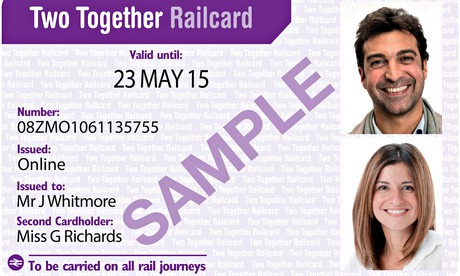
Atoc expect the average saving for holders of the Two Together Railcard to be more than £100 a year. Photograph: Atoc/PA


A new railcard allowing two people travelling together to save a third on train fares will go on sale on Monday.

The Two Together railcard costs £30 a year and can be used an unlimited number of times by two people whose names and photographs are on the card. Railcards were previously only available to those who were either under 26, over 60, disabled, serving in the armed forces or travelling with children.It is the first national railcard to be launched for 30 years and allows couples, pairs of friends, relatives or colleagues to make significant savings on fares.

It can be used to save on standard and first class anytime, off-peak and advance tickets for travel throughout Britain after 9.30am Monday to Friday and all day at weekends and bank holidays.

David Mapp, commercial director at the Association of Train Operating Companies (Atoc), said: "The Two Together railcard will make train journeys even more attractive for pairs of passengers nationwide. It's ideal for visiting family and friends, day trips or weekend breaks, so the Two Together railcard will encourage more people to leave the car at home and take the train instead.

"As well as savings on rail travel, the new railcard also offers savings on attractions, theatre shows, restaurants, hotels and more."

Atoc gave the example of two super off-peak single tickets from Birmingham New Street to London Euston which would normally cost £45.80 but would be £30.50 with the new railcard.

Two advance single tickets from Newcastle to Leeds will now cost £14.50 – saving £7.50.

Atoc expects the average saving for holders of the Two Together railcard to be more than £100 a year.

( theguardian news )